- Reviewing completed DSO assessments
- Discuss when to contact the Service Navigation Team
- Discuss next steps in accessing and understanding services, including planning for housing
- Q&A period with the DSOER team

(Photo: Susan and Austin)
When Susan White talks about raising her son Austin, she speaks with honesty, determination and deep love. She also speaks about the importance of not having to do it alone.
Austin is 14 years old and lives with a rare genetic condition called Wiedemann-Steiner syndrome, as well as autism spectrum disorder. Fewer than 1,000 people worldwide are known to have the syndrome. Susan says navigating the healthcare, education and support systems has been a complex journey from the beginning.
“I’m trying to raise a child that lives in a world not made for him,” she says.
Susan first connected with Service Coordination Support (SCS) in 2017 through a referral from the Children’s Hospital of Eastern Ontario (CHEO). At the time, she and her husband were trying to coordinate services, advocate within the school system and access specialized supports for Austin’s development and feeding needs. They felt overwhelmed and exhausted trying to navigate a complex system.

(Photo of Austin)
“There were 23 people in the room,” Susan recalls of the first meeting. “The principal, CHEO, occupational therapists, physiotherapists. Everyone was there to talk about what this little boy needed.”
For Susan, SCS quickly became more than just another service provider. “SCS was a lifesaver,” she says.
Over the years, Susan worked closely with two children’s case managers who helped coordinate services, prepare documentation for funding applications, and attend meetings alongside the family.
“SCS would come to the meetings, do the notetaking, know what needed to be done, reiterate our goals, and discuss our options,” Susan says. “It was coordination of care that I could rely on and people in my corner. That was huge.”
She says one of the biggest differences was having someone who could advocate on behalf of the family.
“When SCS calls, things get done. It’s not the ‘crazy mom’ calling,” Susan says. “They fought battles when I couldn’t as a mom. There was empathy. That’s the most important thing.”
Today, Austin’s needs continue to evolve as he prepares for high school. Susan says having SCS involved helps ensure the people around him understand the full picture — emotionally, physically and developmentally.

(Photo of Austin)
“SCS holds weight,” she says. “They’re one of the tools in my backpack. The continuity, collaboration, and coordination with CHEO and others make me feel powerful because I have a team behind me.”
Susan describes consistency and compassion as two of the organization’s greatest strengths.
“Having staff that care, and are allowed to love their clients, that matters,” she says.
She also credits SCS with helping her think about Austin’s future in a bigger way, not just day-to-day support, but long-term planning and stability. Looking back, Susan says she wants other families to know they do not have to navigate the system on their own.
“One thing needs to tie everything together, and that’s what SCS does,” she says. “I can’t imagine my life, or Austin’s life, without SCS. I want other families to have the support I have.”
Partners for Planning (P4P) invites you to join their FREE online webinar, Talking About Children’s Mental Health, on Wednesday June 3, 2026, from 7 p.m. – 8 p.m. (EST).
This session is an open conversation about the intersection of disability and mental health for young children, to help break through the stigma, making it easier for you and your family to seek help when it’s needed.
This session will highlight:
To learn more and register, visit Partners for Planning – Talking About Children’s Mental Health
The One-to-One Summer Support Worker Reimbursement Fund is available to Ontario families of children or youth with autism spectrum disorder (ASD) who retain the services of a one-to-one worker to accompany their child to a camp of program, or out on community outings during the months of July and August.
Maximum reimbursements of $600, per child or youth, (up to their 18th birthday), will be made to subsidize services between July and August. Reimbursement will be provided on a random selection made by all eligible applicants who apply. A minimum of 500 children from across Ontario are expected to receive reimbursement.
All applications must be received by May 31, 2026, to be considered for the randomized draw.
To apply, visit: 2026 One-to-One Summer Support Worker Reimbursement Fund | Autism Ontario
Join Developmental Services Ontario (DSO) on Wednesday, May 20 from 12 p.m. – 1 p.m. (EST) for the free virtual webinar, Help Shape Canada’s National Housing Strategy.
This webinar will be facilitated by DSO Housing Navigators from the Toronto Region, South-East Region, and Eastern Region. It is open to people with a developmental disability, their family members and/or support networks, and developmental service professionals in Ontario.
Make your voice heard! Help advocate for a housing strategy that represents the dignity and human rights of all people, including those with developmental disabilities.
Topics include:
Register here: Help Shape Canada’s National Housing Strategy
For questions please contact:
Notice is hereby given that the 2026 Annual General Meeting of the Members of Service Coordination Support (SCS) for People with Developmental Disabilities will be held as follows:
DATE: Tuesday, June 16th 2026
TIME: 6:00 p.m.
LOCATION: 1400 St. Laurent Blvd., suite 507, Ottawa, ON, K1K 4H4
Free parking is available.
The Agenda, Annual Report, Audited Financial Statements, Auditor’s Report for the Financial Year and the By-Laws will be available at the meeting in both official languages.
To RSVP, please call 613-748-1788 x 242, or use the following link: Registration form for initiatives | Service Coordination Support (SCS)
If you have any questions, please contact vboucher-bertrand@scsonline.ca
Later this year, SCS will begin using a secure online client portal. This new portal will make it easier for you to access your information and complete tasks online.
The portal is designed to support independence, provide clear up‑to‑date information and offer a secure and convenient way to manage your funding‑related details.
The expected launch is July 2026. We will share more information and provide opportunities to learn about the new system closer to the launch date.
Client Portal Capabilities:
When the client portal becomes available, you will be able to:
Support will be available to help you use the new client portal, including:
At SCS, our goal is to connect you with case management services as soon as possible.
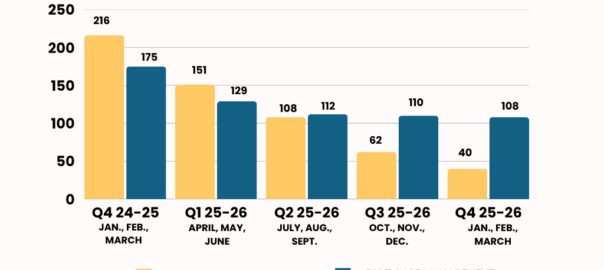
The current average wait time for Children’s Case Management is 40 days, a decrease of 22 days from the previous quarter.
The current average wait time for Adult Case Management is 108 days, a decrease of 2 days from the previous quarter.
We remain committed to helping ensure you are connected to services promptly.
At Service Coordination Support (SCS), we’re working on refreshing our brand so it better reflects the people we serve. As part of this process, we’re gathering feedback from our community, and we’d love to hear from you.
There’s still time to have your say. Help shape what comes next by completing this quick, anonymous survey: https://forms.gle/8CE3dBjWF3PsDaxy9
If you have any questions, please reach out to Mackenzie Braithwaite at mbraithwaite@scsonline.ca.
Thank you for being part of our community, and for taking a moment to share your perspective.

At SCS, our goal is to connect you with case management services as soon as possible.
The current average wait time for Children’s Case Management is 62 days, a decrease of 46 days from the previous quarter.
The current average wait time for Adult Case Management is 110 days, a decrease of 2 days from the previous quarter.
We remain committed to helping ensure you are connected to services promptly.
Stay tuned for more waitlist updates in the next issue of SCS Express.